
Somewhere around the third tea plantation sliding past your window, most people stop checking their phones. That’s the effect this railway has, and it’s the reason the Kandy–Ella line shows up on more “things to do before you die” lists than almost anything else in Sri Lanka. It’s also, frustratingly, one of the most mis-booked train journeys in the country — tourists turn up at the station with no reservation and end up standing in a doorway for six hours instead of sitting by an open window. Here’s how to actually get it right.
Why this railway exists in the first place
The British built this line in the 19th century to move tea down from the highlands to Colombo’s port, and to do it they had to fight some genuinely brutal terrain — hairpin curves, nine spiral tunnels, viaducts strung across ravines. The result, more than a century later, feels less like a commuter railway and more like a moving viewing platform. That backstory is worth knowing before you board, because it explains why the train is slow, why the windows open, and why locals still ride it as basic transport while you’re taking photos of a bridge.
The main routes to and from Ella
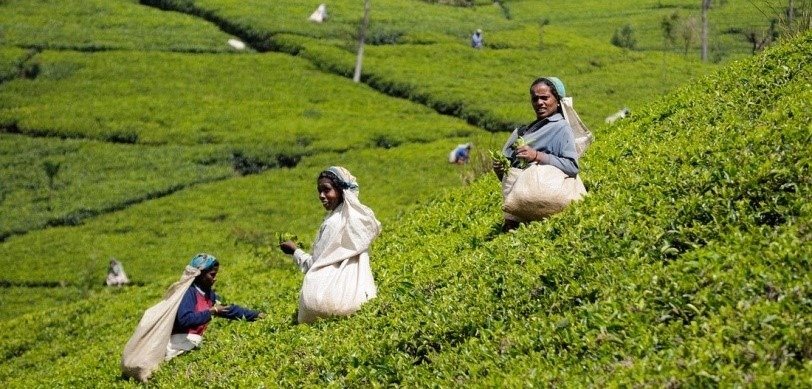
Kandy to Ella is the one everyone talks about, and for good reason. It covers roughly 120 km through the central highlands and takes 6–7 hours, climbing from Kandy at about 500 metres to Pattipola — the highest station on the entire Sri Lankan network at nearly 1,900 metres — before descending into Ella. The scenery genuinely doesn’t repeat itself: tea estates give way to forest, forest gives way to waterfalls, waterfalls give way to the Nine Arch Bridge coming into view below Ella.
Nanu Oya to Ella is the shorter, more concentrated version of the same experience — about 2.5 to 3 hours instead of 6, and it skips the earlier, less scenic stretch out of Kandy. If you’re already staying in Nuwara Eliya (Nanu Oya is its station), this is the smart way to reach Ella without sacrificing the best part of the ride.
Ella to Badulla (or the reverse) is short — under an hour — but often overlooked. It’s a good option if you want a taste of the hill-country railway without committing a full day, or if your itinerary has you approaching from the southeast.
Colombo to Ella covers the whole line end to end, around 300 km and roughly 9–10 hours. Realistically, most travelers don’t ride the entire thing — the flat stretch out of Colombo isn’t the reason this railway is famous — but it’s there if your schedule allows it.
Three named express trains cover most of this route: the Podi Menike, the Udarata Menike, and the Denuwara Menike. They run on slightly different schedules, so which one you take usually comes down to what time you want to arrive, not which is “better” — check current departure times before booking, since Sri Lanka Railways adjusts these periodically.
The most famous train trips in Sri Lanka
Ella isn’t the only reason to get on a train here — it’s just the most photographed one. If you’re planning a longer trip, or writing your own route around the island, these are the journeys that keep coming up as the country’s best.
Kandy to Ella (the “Blue Train”) This is the one everyone means when they say “the Sri Lanka train.” Covered in detail above — tea estates, cloud forest, the Nine Arch Bridge, roughly 6–7 hours from Kandy at 500 metres up to Pattipola at nearly 1,900 metres before the descent into Ella. If a trip only has room for one train journey, it’s this one. 👉 Book Kandy–Ella tickets here
Colombo to Kandy The practical opener to the hill-country line, and often the first train a visitor takes in Sri Lanka. About three hours from Colombo Fort station, climbing steadily from coastal sprawl through rubber estates and paddy fields into the greener, cooler air around Kandy — home to the Temple of the Sacred Tooth Relic. Less dramatic than the Ella leg, but a genuinely pleasant way to start a highland itinerary instead of driving it. 👉 Book Colombo–Kandy tickets here
Colombo to Galle (the coastal line) The saltwater counterpart to the hill-country routes. For most of the roughly 2.5–3 hour ride, the track runs close enough to the Indian Ocean that waves are visible from your seat, especially past Mount Lavinia. It passes Moratuwa, Kalutara and Hikkaduwa before pulling into Galle — for the best ocean views, take a seat on the right-hand side heading south. 👉 Book Colombo–Galle tickets here
Badulla to Ella The short version, and an easy add-on if a full Kandy–Ella day doesn’t fit your schedule. Around 90 minutes to 2.5 hours depending on the service, through much of the same tea-and-forest scenery as the longer route, just compressed. Good for travelers approaching from the southeast or short on time. 👉 Book Badulla–Ella tickets here
Colombo to Badulla (end to end) The longest domestic rail journey in the country — about 290 km and roughly 10–11 hours, running the entire hill-country line from the coastal capital to the mountain town of Badulla. Not a trip most people do in one sitting, but it exists as the full version of everything the Kandy–Ella and Nanu Oya–Ella legs only sample. Traveling Badulla-to-Colombo direction tends to be quieter and easier to find a seat on than the reverse. 👉 Book Colombo–Badulla tickets here
Colombo to Jaffna — the Yal Devi Express The one with the most history behind it. Nicknamed the “Queen of Jaffna,” this line first opened in 1956 and was severed for 25 years during the civil war — the last train reached Jaffna in 1990 before the line was destroyed, and service only resumed in 2014. Today it’s about a 7-hour ride from Colombo through Anuradhapura into the Tamil-majority north, offering a completely different landscape and cultural texture from the hill country or the coast. Worth considering for travelers who want to see more of Sri Lanka than the standard south-and-central loop. 👉 Book Colombo–Jaffna tickets here
Which class should you actually book?
Third class exists and it’s cheap — sometimes under a dollar between major stations — but it’s unreserved, meaning no guaranteed seat and standing room only once it fills, which happens fast on this line.
Second class reserved is the sweet spot for most travelers. You get a guaranteed seat, windows that actually open (important — this is not a route to experience through glass), and a fair price. This is what most seasoned visitors recommend, and it’s what we point our own guests toward.
First class observation / air-conditioned saloon is more comfortable and has numbered seats, but the sealed, non-opening windows are a real trade-off for photography — you’ll fight glare and reflections the whole way. If you’re prioritizing comfort over photos, it’s a reasonable choice. If you want the wind-in-your-hair version people post about, it isn’t.
Seat position matters more than class. On the Kandy–Ella direction, the right-hand side generally gets the better views; heading the other way, from Nanu Oya toward Ella, the left side does. It’s a small detail that makes a real difference over six hours.
Booking: where people go wrong
Reservations for second and first class open 30 days before travel through Sri Lanka Railways’ official system, and popular departures — especially the early-morning ones — sell out well within that window during peak season (December–March, and again around July–August). If your Ella train is a fixed point in your itinerary, this is not the ticket to leave until you land.
The official government booking portal works, but it isn’t always the smoothest experience for foreign travelers navigating an unfamiliar system in a second language. Most travelers instead book through an established online travel platform that handles Sri Lanka train reservations directly — you get a proper e-ticket, English-language support, and confirmation without needing local ID details or fighting a portal that occasionally times out.
👉 Book your Kandy to Nanu Oya train tickets here — reserve your seat and class in advance, with instant confirmation, so you’re not left standing in a doorway for six hours.
A few things nobody tells you until you’re there
The Nine Arch Bridge sits between Ella and Demodara, not before Ella — so if you’re arriving in Ella from Nanu Oya or Kandy, you haven’t passed it yet; most visitors walk out to see it properly once they’ve checked into their accommodation. Trains run on fans, not air conditioning, outside first class, so bring a layer for the highland stretch, where it gets noticeably cooler than the coast. And build in slack: delays of thirty minutes to an hour aren’t unusual on this line, so don’t schedule anything tight immediately after arrival.
Where this fits into your Sri Lanka trip
The Ella train works best as part of a longer hill-country loop rather than a single out-and-back detour — Kandy, Nuwara Eliya’s tea country, and Ella naturally string together, and Ella itself is a good base for a day or two of hiking before continuing south or back toward the coast. Our multi-day tours build this stretch in as a highlight rather than a rushed afternoon, with private transport handling the parts of the route that don’t need to be on rails. If you’d rather have the whole hill-country leg planned around your dates, get in touch through our contact page and we’ll work the train into your itinerary properly.